

in Ankeny, Urbandale, Johnston and surrounding areas


Lawn core aeration is the solution to soil compaction, which often occurs in high-traffic areas and where heavy equipment is used. Over time, compacted soil limits water absorption and increases drought stress while encouraging weed growth.
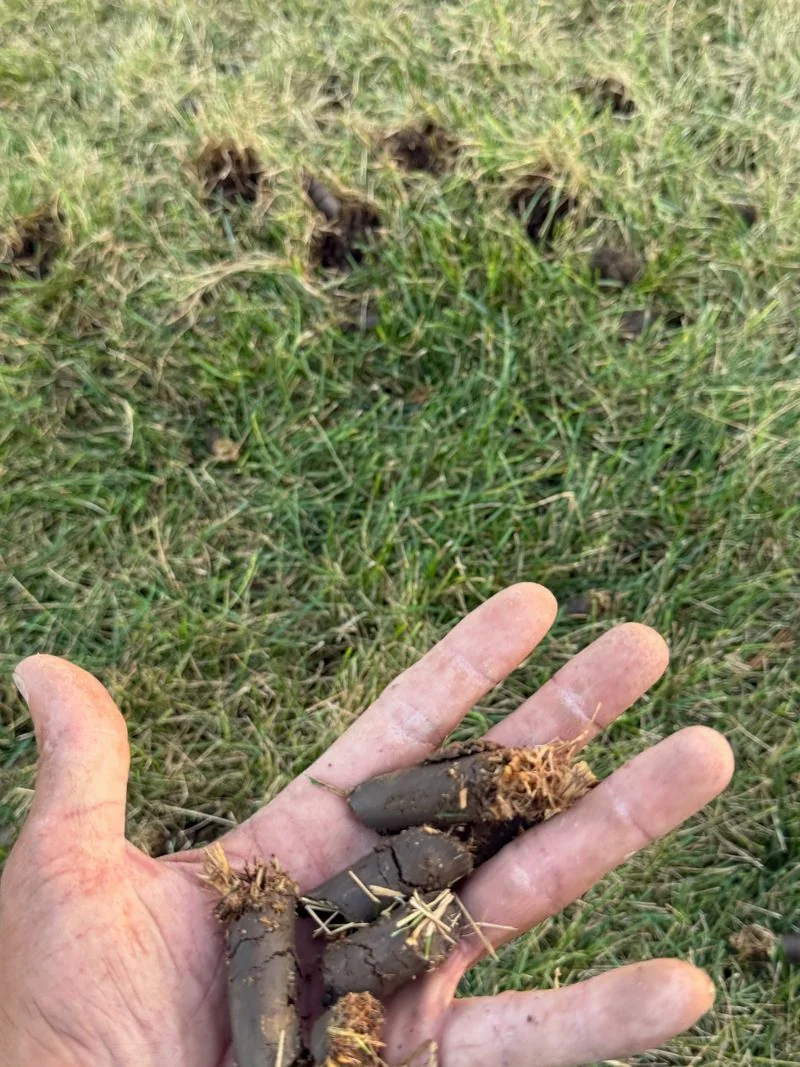
During core aeration, we remove 3–4 inch soil plugs from the turf. This process relieves compaction and improves airflow while allowing nutrients and moisture to reach the root zone more effectively.
In addition, aeration eliminates preferred weed growth areas commonly found in compact soil. It also helps break down excess thatch, improving turf resilience and root development.
The best time to carry out aerations in Iowa is early fall, shortly after summer heat breaks in August, as this time of year provides the perfect weather for the soil in Iowa to
recuperate. However, spring aeration in April is also effective when conditions allow.
More Oxygen getting into the root zone for healthier plants
Increased amounts of fertilizer uptake hitting its target
Strengthen Turfgrasses root system
Reduces soil compaction
Increased tolerance to heat and drought conditions
Also breaks down the potential thatch layer above the soil
More Oxygen getting into the root zone for healthier plants
Increased amounts of fertilizer uptake hitting its target
Strengthen Turfgrasses root system
Reduces soil compaction
Increased tolerance to heat and drought conditions
Also breaks down the potential thatch layer above the soil
We recommend scheduling aeration and overseeding services in early fall to maximize germination success. This timing allows cool-season grass seed to establish before stressful weather conditions arrive.
When overseeding is combined with aeration, seed-to-soil contact improves significantly. With proper watering, this increases germination rates, fills bare spots, and reduces visible weeds. Ultimately, your lawn becomes thicker, healthier, and more uniform.
Germination time for Kentucky Bluegrass seed typically falls between 14 and 30 days. The best root growth occurs when soil temperatures remain between 55 and 70 degrees, while temperatures exceeding 75 degrees can slow or impede root development.
Does Kentucky Bluegrass spread? Kentucky Bluegrass spreads through underground rhizomes, allowing it to naturally fill in thin areas over time. Additionally, it displays a rich green color once established and offers remarkable wear resistance, making it one of the softest turfgrass options available. In comparison to other turfgrasses, it emerges from dormancy faster, which allows for lower mowing heights without placing additional stress on the lawn.
This turfgrass variety also exhibits excellent cold tolerance, making it well suited for spring, fall, and cooler morning conditions. However, Kentucky Bluegrass struggles during extended periods of high heat and requires consistent maintenance. As a result, it also takes the longest to fully mature, sometimes requiring up to a year to reach peak density.
Tall Fescue germination time typically ranges from 7 to 21 days when soil temperatures are between 60 and 65 degrees. For best results, overseeding in Iowa is recommended in early September, which allows ample time for germination before the first hard freeze of the season.
This turfgrass features a dark green color with a medium-sized leaf texture and performs well in both full sun and partial shade. In comparison, Tall Fescue develops a deep root system that helps reduce summer heat stress while improving drought tolerance. Because of this, it offers the highest drought resistance of the three turfgrass types and generally requires less water.
While Tall Fescue provides good wear tolerance, recovery from damage tends to be slow. As a result, periodic overseeding is often necessary to maintain a thick and uniform lawn.
Ryegrass seed typically germinates between 5 and 7 days, although it can sprout in as little as 3 days under ideal conditions. Because of this, it is the fastest germinating turfgrass among the three types commonly used in Iowa lawns.
Ryegrass has a distinct appearance, with a noticeable shine on the underside of the leaf that enhances striping patterns when mowing. Additionally, it greens up early in the spring and maintains its appearance later into the growing season.
This turfgrass performs well in full sun and partial shade, offers good wear tolerance, and is compatible with wet soil conditions. However, Ryegrass is a bunch-type grass and does not spread to fill bare spots like Kentucky Bluegrass. In colder climates, it is also less tolerant of low temperatures and may experience winter damage. During periods of high heat, it can become susceptible to fungal issues such as Pythium Blight.


Get a lawn that grows thicker, stronger, and greener—starting today.

Count on STRETCH for on-time, dependable lawn mowing and maintenance—delivered with consistency and care across Ankeny, Urbandale, Johnston, and surrounding areas.

From weekly mowing to seasonal cleanups, we provide full-service lawn care solutions for both residential and commercial properties.

Based in Granger, Iowa, we understand local lawns and deliver professional results throughout Ankeny, Urbandale, Johnston, and nearby communities.
Expert Turf Care Starts with a Conversation — Request Your FREE Estimate Today in Ankeny, Urbandale, Johnston, and Surrounding Iowa Communities