
LOOSER SOIL. DEEPER ROOTS. THICKER GRASS.
Core Aeration & Overseeding
Core Aeration & Overseeding in the Des Moines Metro
Stretch Property Maintenance provides core aeration and overseeding for homes and businesses in Granger, Ankeny, Johnston, Urbandale and the rest of the Des Moines metro. Most lawns here grow on heavy clay, and construction in newer neighborhoods packs it down even harder. Water runs off, roots stay shallow, and the grass thins out.
Aeration opens the soil back up. Overseeding fills in the thin spots. You can get either service on its own, or both together for the biggest improvement.
Core Aeration
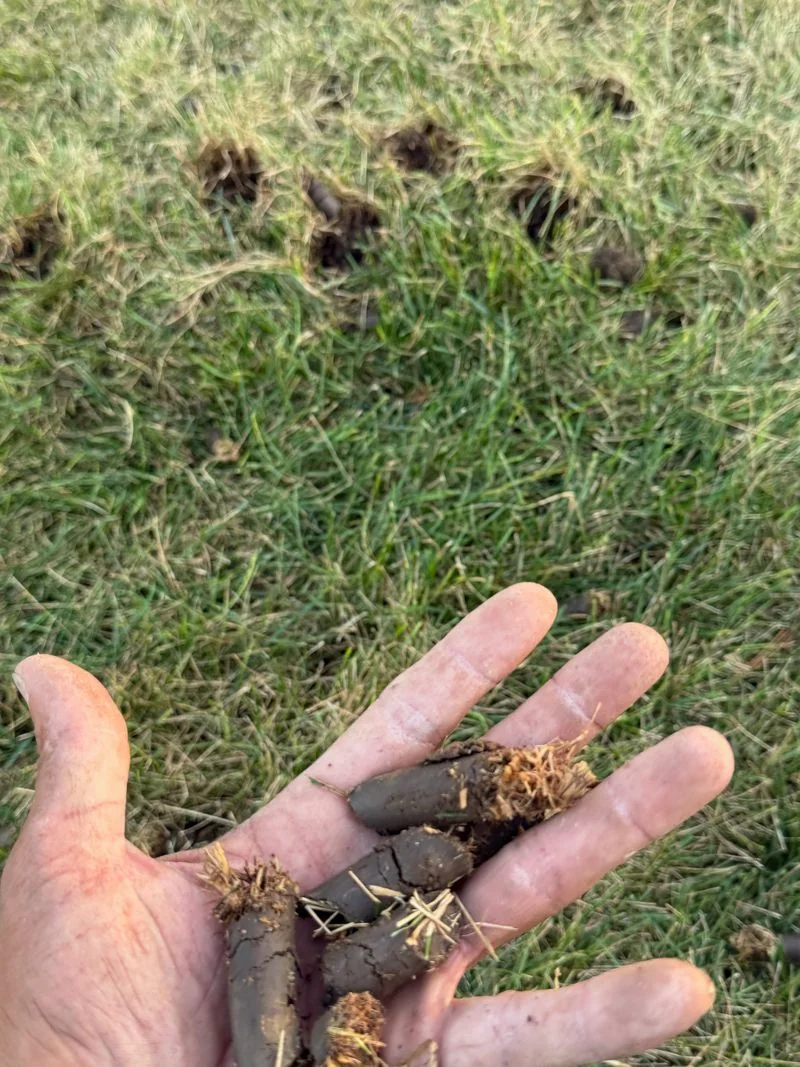
Core aeration pulls 3–4 inch plugs of soil out of the lawn. That relieves compaction from foot traffic, mowers and construction, and lets air, water and fertilizer reach the root zone. The plugs break down on the surface in a week or two.
Aeration is a great service on its own. It’s one of the best things you can do for a lawn that has never been aerated, and you don’t need to be on a program to get it.
Spring or Fall Aeration
Spring aeration. If you’re new to Stretch, or your lawn has never been aerated, April is a good place to start, once the ground has thawed. We aerate before the crabgrass preventer goes down, ideally before the soil hits 55 degrees. Doing it in that order keeps the preventer barrier in place once it’s applied, and your lawn starts the season with loose soil that takes in water and fertilizer.
Fall aeration. The last week of August through the second week of October is the other window. The summer heat has broken, the soil is still warm, and the grass is putting its energy into roots. Fall aeration also sets the lawn up for overseeding.
More Oxygen getting into the root zone for healthier plants
Increased amounts of fertilizer uptake hitting its target
Strengthen Turfgrasses root system
Reduces soil compaction
Increased tolerance to heat and drought conditions
Also breaks down the potential thatch layer above the soil
More Oxygen getting into the root zone for healthier plants
Increased amounts of fertilizer uptake hitting its target
Strengthen Turfgrasses root system
Reduces soil compaction
Increased tolerance to heat and drought conditions
Also breaks down the potential thatch layer above the soil
Overseeding
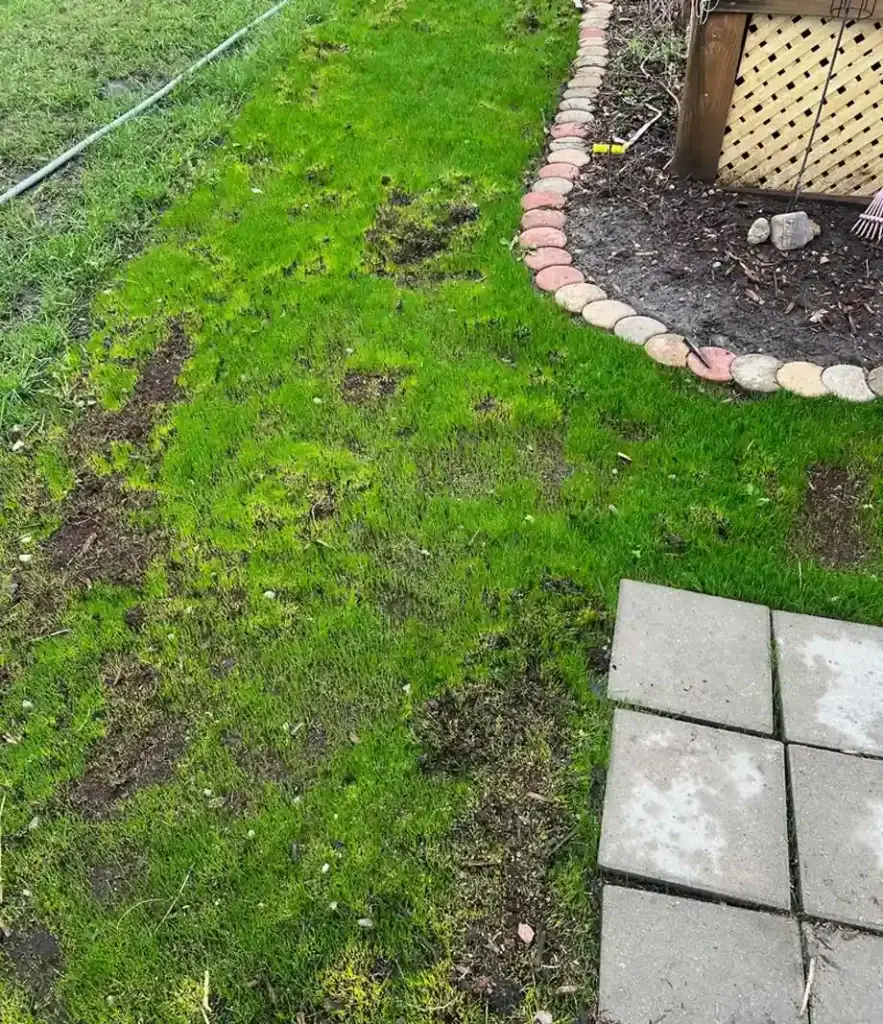
Overseeding spreads new grass seed into an existing lawn to thicken thin areas and bring in stronger grass varieties. We seed right after aeration, so the seed falls into the holes and gets good contact with the soil.
Fall is the best time to overseed. From the last week of August, once the heat breaks, through the second week of October, warm soil and cooler air give new grass the best start. The goal is about three weeks of growth before the first hard frost. The seedlings have the fall and the following spring to fill in before summer.
Book fall overseeding early. Weather can shrink the fall window to just a few weeks, and we schedule in the order people sign up. Reserving your spot early in the year is the best way to make sure it gets done.
Spring overseeding is possible, with limits. The window runs about three to four weeks, from late March to mid-April, and the sooner the better so the new grass can mature before the summer heat. Spring overseeding is only an option for lawns that are not on weed control. Crabgrass preventer keeps new grass from growing up through the soil, so program customers are overseeded in the fall.
Aeration & Overseeding at a Glance
| Spring | Fall | |
|---|---|---|
| Core aeration | April, once the ground has thawed and before the crabgrass preventer goes down. A good first step for new customers and lawns that have never been aerated. | Last week of August through the second week of October. |
| Overseeding | Late March to mid-April only, the sooner the better. Not available on lawns getting weed control. | Best results. Last week of August through the second week of October. Book early. |
| Best for | Opening up compacted soil before the season starts. | Thickening thin, patchy or worn turf. |
Included in Our Lawn Care Programs
Aeration and overseeding fit into all three of our season-long lawn care programs, which pair 25 mowing visits with fertilizer and weed control. Program customers are overseeded in the fall.
- Elite: fall core aeration and overseeding are included, along with grub control, a soil builder and premium slow-release fertilizer. It costs less than adding those services one at a time.
- Enhanced: add aeration, or aeration with overseeding, to your program.
- Essentials: add aeration, or aeration with overseeding, to your program.
Other options
- Aeration only: for lawns that are already thick and just need the soil opened up.
- Aeration + overseeding: for thin, patchy or worn turf.
- Compost topdressing: spread right after aeration to add organic matter to the soil.
Not on a program? Aeration and overseeding are available as standalone services.
Three Most Common Types of Turfgrass in Iowa
Kentucky Bluegrass
Germination time for Kentucky Bluegrass seed typically falls between 14 and 30 days. The best root growth occurs when soil temperatures remain between 55 and 70 degrees, while temperatures exceeding 75 degrees can slow or impede root development.
Does Kentucky Bluegrass spread? Kentucky Bluegrass spreads through underground rhizomes, allowing it to naturally fill in thin areas over time. Additionally, it displays a rich green color once established and offers remarkable wear resistance, making it one of the softest turfgrass options available. In comparison to other turfgrasses, it emerges from dormancy faster, which allows for lower mowing heights without placing additional stress on the lawn.
This turfgrass variety also exhibits excellent cold tolerance, making it well suited for spring, fall, and cooler morning conditions. However, Kentucky Bluegrass struggles during extended periods of high heat and requires consistent maintenance. As a result, it also takes the longest to fully mature, sometimes requiring up to a year to reach peak density.
Tall Fescue
Tall Fescue germination time typically ranges from 7 to 21 days when soil temperatures are between 60 and 65 degrees. For best results, overseeding in Iowa is recommended from the last week of August through the second week of October, which gives the seed about three weeks to grow before the first hard frost.
This turfgrass features a dark green color with a medium-sized leaf texture and performs well in both full sun and partial shade. In comparison, Tall Fescue develops a deep root system that helps reduce summer heat stress while improving drought tolerance. Because of this, it offers the highest drought resistance of the three turfgrass types and generally requires less water.
While Tall Fescue provides good wear tolerance, recovery from damage tends to be slow. As a result, periodic overseeding is often necessary to maintain a thick and uniform lawn.
Ryegrass
Ryegrass seed typically germinates between 5 and 7 days, although it can sprout in as little as 3 days under ideal conditions. Because of this, it is the fastest germinating turfgrass among the three types commonly used in Iowa lawns.
Ryegrass has a distinct appearance, with a noticeable shine on the underside of the leaf that enhances striping patterns when mowing. Additionally, it greens up early in the spring and maintains its appearance later into the growing season.
This turfgrass performs well in full sun and partial shade, offers good wear tolerance, and is compatible with wet soil conditions. However, Ryegrass is a bunch-type grass and does not spread to fill bare spots like Kentucky Bluegrass. In colder climates, it is also less tolerant of low temperatures and may experience winter damage. During periods of high heat, it can become susceptible to fungal issues such as Pythium Blight.
Common Questions
What would you rather be doing instead of yard work? Email us with your answer and any other questions you have.
How do I know if my lawn needs aeration?
If water puddles or runs off, the soil feels hard, the grass is thin, or the lawn has never been aerated, it will probably benefit. Lawns in newer neighborhoods almost always do.
Can I get aeration without signing up for a program?
Yes. Aeration is a standalone service, and it’s a good first step for new customers.
Why aerate in spring before the crabgrass treatment?
Crabgrass preventer works by forming a barrier at the soil surface. Aerating first means that barrier stays in place once it’s applied.
Is it better to overseed in spring or fall?
Fall. The last week of August, once the heat breaks, through the second week of October gives the most reliable results. Spring overseeding can work between late March and mid-April. The sooner it’s done, the more time the new grass has to mature before the summer heat.
Can I overseed in spring if I’m on a weed control program?
No. Crabgrass preventer keeps new grass from growing up through the soil, so it would stop spring seed too. If you’re on a weed control program, we overseed in the fall.
When should I book fall overseeding?
Early in the year. Weather can shrink the fall window to a few weeks, and we schedule in the order people sign up.
What should I do after overseeding?
Keep the top of the soil moist with light, frequent watering until the new grass is up, then water less often but more deeply. We’ll leave watering instructions after the visit.
Should I pick up the soil plugs?
No. Leave them. They break down in a week or two and return soil and nutrients to the lawn.
How often should I aerate?
Once a year is right for most lawns here. Heavy clay and high-traffic lawns benefit the most.
Book Aeration & Overseeding
Book Aeration & Overseeding
The Stretch Triangle
Mow. Fertilize. Aerate.

Mowing, fertilizing, and aeration aren’t separate services — they work as one system. Mow too short and the grass goes into a stressed state with less ability to use natural resources. Skip aeration while you keep fertilizing, and you risk the active ingredient never reaching the root zone. Aeration also helps roots by opening an easier path for oxygen. Cover all three corners and you clear the roadblocks on the way to a better-looking lawn.
Why Choose Us?

Reliable Lawn Services
Count on STRETCH for on-time, dependable lawn mowing and maintenance—delivered with consistency and care across Ankeny, Urbandale, Johnston, and surrounding areas.

Complete Lawn Care
From weekly mowing to seasonal cleanups, we provide full-service lawn care solutions for both residential and commercial properties.

Local Granger Experts
Based in Granger, Iowa, we understand local lawns and deliver professional results throughout Ankeny, Urbandale, Johnston, and nearby communities.
Get Your Free Quote
Your quote starts with this form. Tell us about the property and the services you want, and we’ll reply by email or text with a recommendation and a price.
Keeping it in writing means nothing gets missed, for you or for us. Serving Granger, Grimes, Johnston, Urbandale, Ankeny, and the Des Moines metro.


